Turning validation failures into opportunities for improvement
Picture this: A routine data validation runs overnight. It flags 28% of the records in a core system as non-compliant. You hear the message:
“The data check failed.”
And yet — nothing crashed. No system went offline.
Instead, something powerful just happened: You got a chance to fix something before it caused damage.
Because here’s the truth:
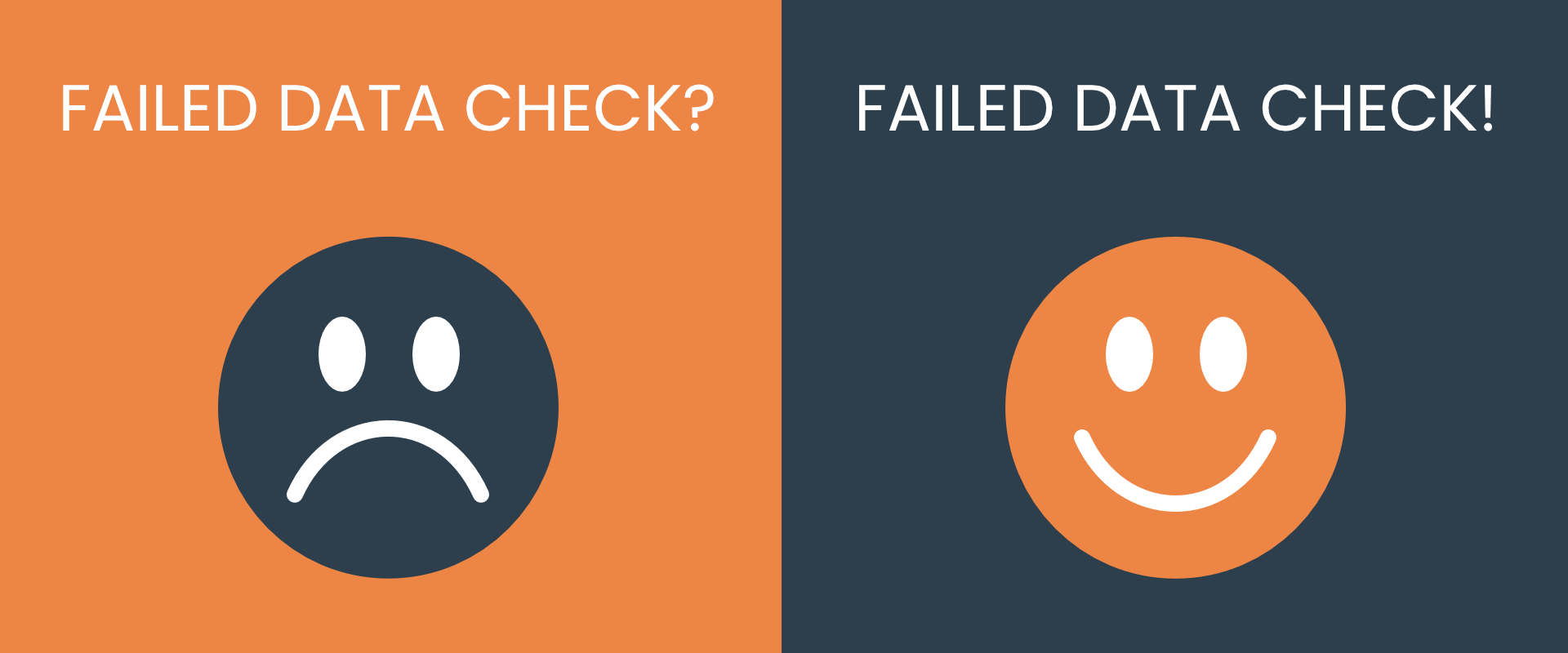
It’s not a failure — it’s an opportunity for improvement.
Redefining the Meaning of ‘Failure’ in Data
In business, the word “failure” often triggers the wrong reactions: panic, blame, escalation. But in the context of data quality, a failed validation simply means:
“The data doesn’t currently meet the expectations we’ve defined for it.”
That’s not a system crash — it’s a quality signal. And it means: The rules are working. They’re protecting the business from silent risk.
Step 1: Understand What the Check Tells You
Not all rule violations are created equal. The first question isn’t “Who caused this?”, but rather:
- Where is this issue coming from?
- How widespread is it?
- Whathappens if we ignore it?
These answers help determine whether you’re facing:
- A minor edge case
- A systemic issue
- A misaligned expectation that needs refining
And that’s where the opportunity lies: You now have visibility.
Step 2: Focus on What Can Be Improved
A failed check is not the end of the road — it’s the start of a refinement process.
It might mean:
- An outdated Business Rule
- A change in source system behavior
- A rule that is too strict — or not strict enough
In all cases, your teams now get to do something rare in enterprise IT:
→ Stop guessing. Start knowing.
Use the failure to improve:
- Your rule definitions
- Your data pipelines
- Your cross-system coordination
- Your ability to explain data to non-experts
Step 3: Respond Strategically, Not Reactively
Don’t fall into the trap of quick fixes and silence. Build a practice of asking:
- Was this failure preventable?
- Is it happening in other areas, undetected?
- What would a “mature” response look like?
With the right processes, failed checks lead to:
- Smarter rule evolution
- Better metadata and ownership
- Improved training for data usersAnd most importantly: fewer downstream surprises.
Where HEDDA.IO Comes In
HEDDA.IO is built on a simple principle:
Data rules belong to the business.
Quality is measured, not assumed.
So when a rule fails, HEDDA.IO helps you:
- See exactly what failed, where, and why
- Separate blocking issues from warnings
- Alert the right people automatically
- Keep a full history of rule changes and violations
- Validate anywhere: in spreadsheets, cloud systems, real-time streams
It turns every failed test into a structured opportunity to get better — not just cleaner.
Rethinking Success in Data Quality
In any mature data-driven organization, the question isn’t:
“Did the data pass?”
It’s: “What are we learning from the data we didn’t expect?”
Because a clean dataset isn’t just a technical success — it’s a sign that you’ve aligned systems, rules, and people.
So next time someone says: “The validation failed.”
You can reply: “Good. Let’s make it better.”
Curious how to turn quality challenges into structured, repeatable improvements?
Let’s talk.